

When it comes to achieving a durable, long-lasting paint finish, choosing the right primer is just as important as selecting the topcoat. While many people assume that all primers perform the same function, there are significant differences between epoxy primer paint and regular primers. The right choice depends on the surface, environmental conditions, and the level of protection required.
Whether you are coating industrial machinery, steel structures, concrete floors, automobiles, or residential surfaces, understanding the strengths and limitations of each primer helps you make an informed decision. This comprehensive guide explains everything you need to know about epoxy primer paint, compares it with traditional primers, and helps you determine which option is best for your project.
What Is Epoxy Primer Paint?
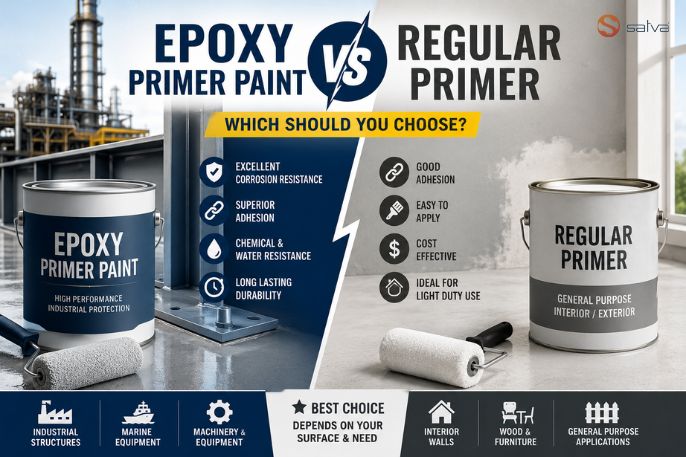
Epoxy primer paint is a high-performance primer formulated with epoxy resin and a hardener. Once mixed, it undergoes a chemical curing process that creates a tough, highly adhesive, and chemically resistant coating.
Unlike conventional primers, epoxy primers provide superior bonding, corrosion resistance, and moisture protection. As a result, they are widely used in industrial, commercial, automotive, and marine applications.
Key Features of Epoxy Primer Paint
- Excellent adhesion to metal and concrete
- Superior corrosion resistance
- Outstanding chemical resistance
- High durability
- Excellent moisture barrier
- Long service life
- Suitable for demanding environments
Because of these qualities, industrial epoxy primer is often the preferred choice for heavy-duty applications.
What Is a Regular Primer?
A regular primer is designed to prepare a surface before painting. It improves paint adhesion, seals porous surfaces, and creates a uniform finish.
Regular primers are commonly available in acrylic, alkyd, latex, and oil-based formulations. They are ideal for residential and light commercial painting where exposure to chemicals, abrasion, or harsh weather is minimal.
Benefits of Regular Primer
- Easy application
- Fast drying
- Cost-effective
- Suitable for interior walls
- Good surface sealing
- Ideal for decorative painting
Although regular primers perform well for everyday projects, they cannot match the performance of epoxy systems in demanding conditions.
Epoxy Primer Paint vs Regular Primer: Complete Comparison
| Feature | Epoxy Primer Paint | Regular Primer |
|---|---|---|
| Adhesion | Excellent | Good |
| Corrosion Resistance | Excellent | Moderate |
| Chemical Resistance | Excellent | Low |
| Water Resistance | Excellent | Moderate |
| Durability | High | Medium |
| Surface Bonding | Superior | Standard |
| Industrial Use | ✔ Yes | Limited |
| Residential Use | ✔ Yes | ✔ Yes |
| Cost | Higher | Lower |
| Lifespan | Long | Moderate |
Why Epoxy Primer Paint Offers Better Surface Protection
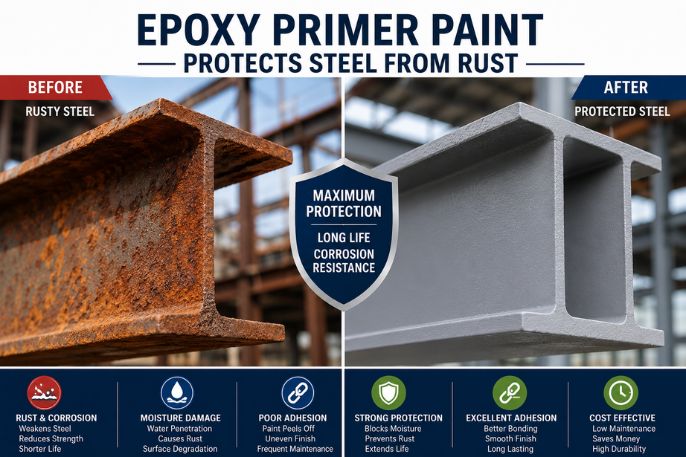
Surface protection is one of the biggest reasons professionals choose epoxy primer paint.
The epoxy resin chemically bonds with the substrate rather than simply sitting on the surface. Consequently, it creates a highly durable protective layer that resists impact, abrasion, moisture, and chemicals.
This advanced bonding significantly extends the lifespan of painted surfaces.
Industries That Benefit Most
- Manufacturing plants
- Warehouses
- Automotive workshops
- Marine environments
- Oil and gas facilities
- Chemical processing plants
- Heavy engineering industries
Epoxy Primer Paint vs Regular Primer for Metal Surfaces
Metal surfaces require excellent corrosion protection.
Moisture, humidity, and oxygen continuously attack exposed steel. If the primer cannot stop corrosion, rust eventually spreads beneath the paint.
Why Epoxy Primer Paint Performs Better
- Creates an airtight protective barrier
- Prevents rust formation
- Improves coating adhesion
- Withstands harsh weather
- Resists industrial chemicals
Regular primers provide only limited corrosion protection, making them suitable mainly for decorative metal applications.
Primer For Epoxy: Why Surface Preparation Matters
Using the correct primer for epoxy is essential for achieving maximum coating performance.
Proper surface preparation ensures that the epoxy system adheres firmly and delivers its intended lifespan.
Recommended Surface Preparation
Clean the surface.
Remove:
- Oil
- Grease
- Dust
- Rust
- Old loose paint
Repair Surface Defects
Fill cracks, dents, and imperfections before priming.
Sand Properly
Mechanical sanding increases surface roughness and improves adhesion.
Remove Moisture
Always ensure the surface is completely dry before application.
Industrial Epoxy Primer for Heavy-Duty Projects
Solvent-Free Primer: A Modern Solution
Industrial environments demand coatings that can withstand continuous abuse.
An industrial epoxy primer provides protection against the following:
- Mechanical wear
- Heavy traffic
- Chemical spills
- Salt exposure
- Industrial cleaning agents
- Abrasion
- Humidity
Because of these benefits, industrial facilities rely on epoxy primers to reduce maintenance costs.
Many industries now prefer solvent-free primer systems because they reduce environmental impact while delivering excellent performance.
Advantages of Solvent-Free Primer
- Low VOC emissions
- Minimal odor
- Excellent film thickness
- Superior chemical resistance
- Better worker safety
- Eco-friendly application
These primers are becoming increasingly popular in food processing plants, pharmaceutical facilities, and environmentally sensitive projects.
Where Regular Primer Still Makes Sense
Although epoxy primers offer outstanding performance, regular primers remain an excellent choice for certain applications.
Best Uses
- Interior walls
- Bedrooms
- Living rooms
- Offices
- Ceilings
- Decorative woodwork
For these areas, regular primers provide sufficient adhesion without the additional cost of epoxy systems.
Cost Comparison: Is Epoxy Primer Paint Worth the Investment?
At first glance, epoxy primers appear more expensive.
However, long-term value tells a different story.
Initial Cost
Regular primers generally cost less.
Maintenance Cost
Epoxy systems require fewer repairs and repainting cycles.
Lifespan
A properly applied epoxy primer can last significantly longer under demanding conditions.
Overall Value
Although the upfront investment is higher, epoxy primers often reduce lifetime maintenance expenses.
Advantages of Epoxy Primer Paint
Superior Adhesion
The coating bonds exceptionally well with concrete, steel, aluminum, and galvanized surfaces.
Excellent Rust Prevention
It blocks moisture from reaching the substrate.
High Chemical Resistance
Suitable for exposure to oils, fuels, solvents, and industrial chemicals.
Longer Coating Life
The protective layer helps extend the service life of the complete coating system.
Better Mechanical Strength
It withstands impacts and abrasion better than traditional primers.
Common Applications of Epoxy Primer Paint
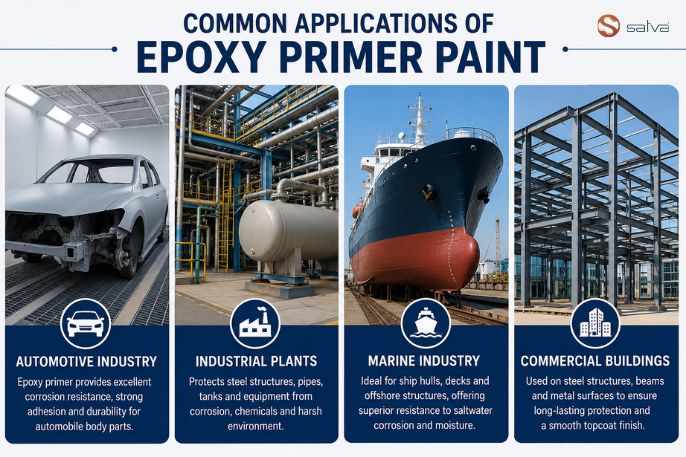
Automotive Industry
- Car chassis
- Truck bodies
- Trailers
- Heavy equipment
Industrial Plants
- Machinery
- Pipelines
- Storage tanks
- Steel structures
Marine Industry
- Ships
- Offshore equipment
- Ports
- Coastal structures
Commercial Buildings
- Structural steel
- Parking garages
- Industrial floors
How to Apply Epoxy Primer Paint Correctly?
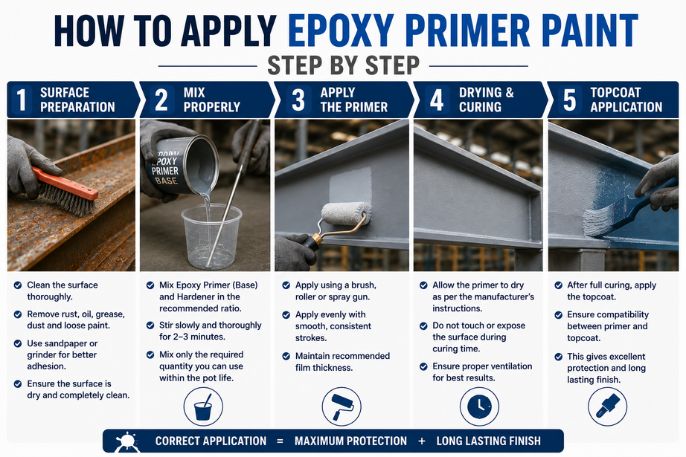
Step 1 – Prepare the Surface
Clean and dry the substrate thoroughly.
Step 2 – Mix Properly
Follow the manufacturer’s recommended mixing ratio.
Step 3 – Apply Evenly
Use a spray gun, roller, or brush, depending on the project.
Step 4 – Maintain Recommended Thickness
Avoid applying excessively thick or thin coats.
Step 5 – Allow Proper Curing
Do not rush the curing process before applying the topcoat.
Which Primer Should You Choose?
Your decision depends on the application.
Choose epoxy primer paint if you need
- Maximum durability
- Rust prevention
- Chemical resistance
- Industrial performance
- Long-term protection
Choose a regular primer if you need:
- Affordable interior painting
- Decorative finishes
- Light-duty applications
- Quick and simple projects
For industrial environments, epoxy remains the superior option.
Choosing the Right Epoxy Primer Paint for Your Project
Selecting the right primer is one of the most important decisions in any painting or coating project. While regular primers are suitable for everyday residential and decorative applications, epoxy primer paint delivers a higher level of performance where durability, adhesion, corrosion resistance, and chemical protection are essential.
For industrial facilities, metal fabrication, automotive components, marine structures, and concrete floors, an industrial epoxy primer provides long-term value by reducing maintenance and extending the life of the entire coating system. If environmental performance is also a priority, a solvent-free primer offers an effective solution with lower VOC emissions.
Ultimately, the best choice depends on your project requirements. By evaluating the surface, operating environment, and expected service life, you can select a primer that protects your investment and ensures a durable, professional finish for years to come.
FAQ Section
Is epoxy primer paint waterproof?
It provides excellent moisture resistance and helps protect surfaces from water penetration.
Can epoxy primer paint be used on concrete?
Yes. It bonds exceptionally well to properly prepared concrete surfaces.
Is industrial epoxy primer suitable for outdoor use?
Yes. When paired with a compatible topcoat, it offers outstanding outdoor protection.
What is a solvent-free primer?
A solvent-free primer contains little or no organic solvent, making it a more environmentally friendly coating option.
Can regular primers stop rust?
Some specialty primers offer limited rust protection, but they generally do not match the corrosion resistance of epoxy primers.
Is a primer for epoxy necessary?
Yes. Proper priming improves adhesion, enhances durability, and extends the lifespan of the coating system.