

Industrial environments demand strong, reliable, and long-lasting surfaces. Heavy machines, forklifts, chemical spills, and constant foot traffic quickly damage untreated concrete. Therefore, businesses increasingly choose epoxy floor coating systems that deliver durability, safety, and long-term value. When properly installed, these coatings transform ordinary concrete into a seamless, high-performance surface that supports industrial productivity.
In addition, you will discover practical insights that help decision-makers select coatings that last longer, perform better, and reduce maintenance costs.
This blog explains how modern epoxy systems work, why industries prefer them, and how to choose the right solution for heavy-duty use.
What Are Epoxy Floor Coatings?
epoxy floor coating is a protective and long-lasting flooring solution that strengthens concrete, improves safety, and reduces maintenance in demanding environments.
Epoxy floor coatings are durable, resin-based surface systems applied over concrete floors to create a strong, seamless, and protective layer. They are made by mixing epoxy resin with a hardener, which chemically reacts to form a rigid plastic material that bonds tightly to the concrete surface.
Once cured, epoxy creates a smooth and non-porous finish that resists wear, chemicals, oil, moisture, and heavy loads. Because of its strength and long service life, epoxy flooring is widely used in industrial facilities, warehouses, factories, hospitals, parking areas, and commercial spaces.
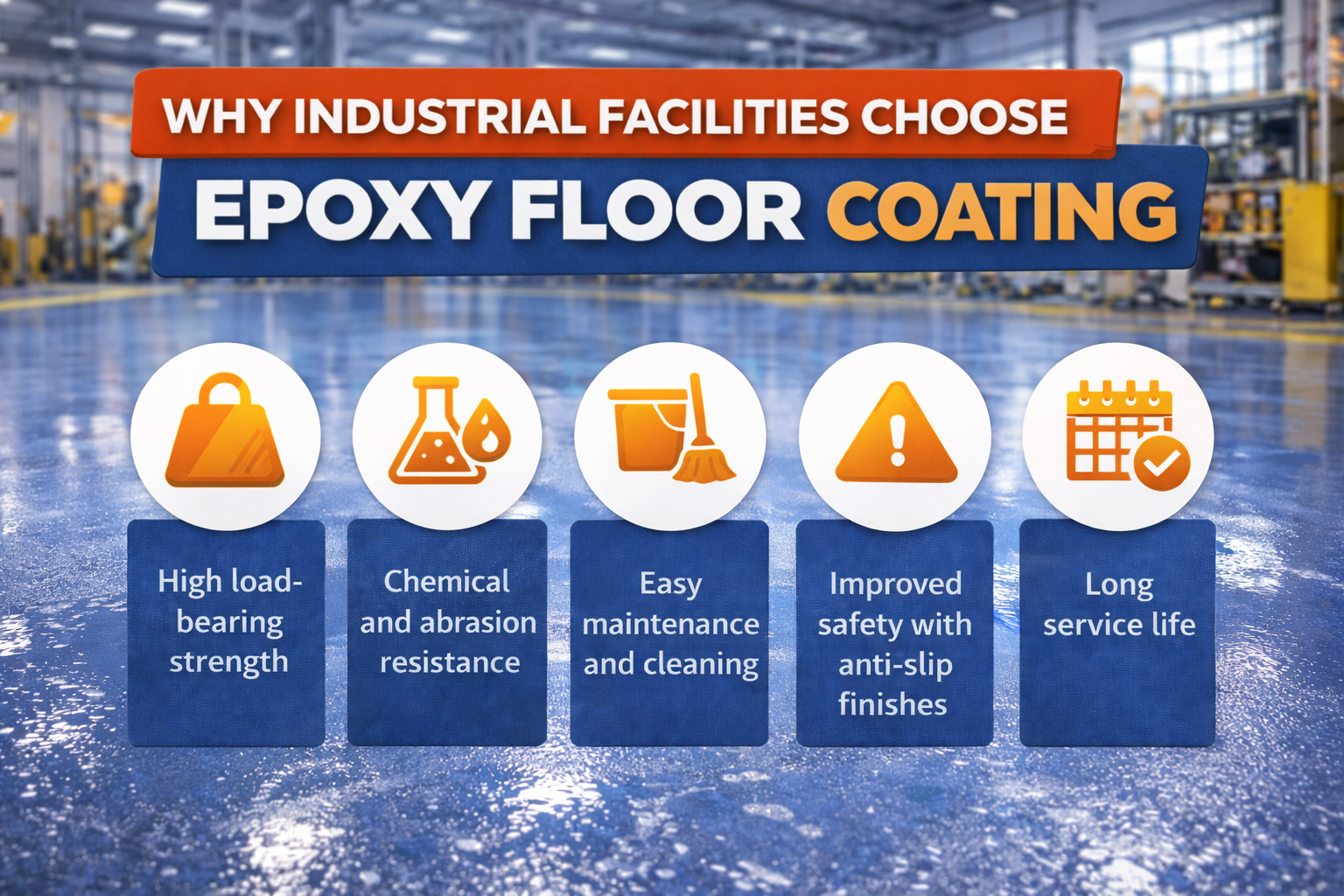
Why Industrial Facilities Choose Epoxy Floor Coating
Industrial spaces operate under intense pressure. Machinery moves constantly, chemicals spill, and production rarely stops. Because of these conditions, companies need a flooring system that performs consistently without frequent repairs.
Epoxy flooring offers a strong, seamless layer that bonds directly with concrete. As a result, it prevents cracks, dusting, and surface deterioration. Moreover, the coating resists chemicals, oil, and abrasion. Consequently, factories, warehouses, and manufacturing plants rely on epoxy systems to maintain safety and efficiency.
In many facilities, concrete floors are quickly damaged by heavy loads. However, a well-designed floor coating system strengthens the surface and extends its life. Therefore, businesses reduce downtime and avoid costly repairs.
Key Advantages for Heavy-Duty Operations
- High load-bearing strength
- Chemical and abrasion resistance
- Easy maintenance and cleaning
- Improved safety with anti-slip finishes
- Long service life
Because of these benefits, epoxy systems remain a top choice for industrial flooring solutions worldwide.
Understanding the Components of Epoxy Flooring Systems
Industrial flooring systems do not rely on a single layer. Instead, they use a multi-layer structure that ensures long-term performance. Each layer plays a specific role in durability and adhesion.
Epoxy Primer for Strong Adhesion
The process begins with an epoxy primer. This layer penetrates the concrete surface and seals pores. As a result, it creates a strong bond between the substrate and the top coating. Without proper priming, coatings may fail prematurely. Therefore, professionals always prepare and prime the surface carefully.
Solvent Free Primer for Industrial Environments
A solvent free primer improves adhesion while maintaining low odor and reduced emissions. Many modern industries prefer solvent-free systems because they support safer indoor air quality. Additionally, they provide excellent penetration into concrete, ensuring long-term bonding strength.
Build Coats and Protective Layers
After priming, installers apply build coats and topcoats. These layers create thickness, strength, and chemical resistance. Furthermore, they add color, texture, and anti-slip properties. In high-traffic areas, thicker systems perform better and last longer.
Because each layer supports the next, a complete system delivers maximum performance. Therefore, businesses should always choose professional installation for industrial flooring projects.
Types of Floor Coatings
Different situations require different types of coatings. Common options include:
- Solvent Free Epoxy HB Bonding Primer
- Self-Smoothing Epoxy Screed Coat
- Solvent Free High Build Epoxy Top Coat
Choosing the right Floor Coatings depends on the environment and surface material.
How to Choose the Right Floor Coatings
To get the best results, it is important to select coatings based on:
- Type of Industry & Usage
- Chemical & Moisture Exposure
- Evaluate environmental conditions
- Decide on thickness and system type
- Safety Requirements
Professional consultation ensures the correct solution for every application.
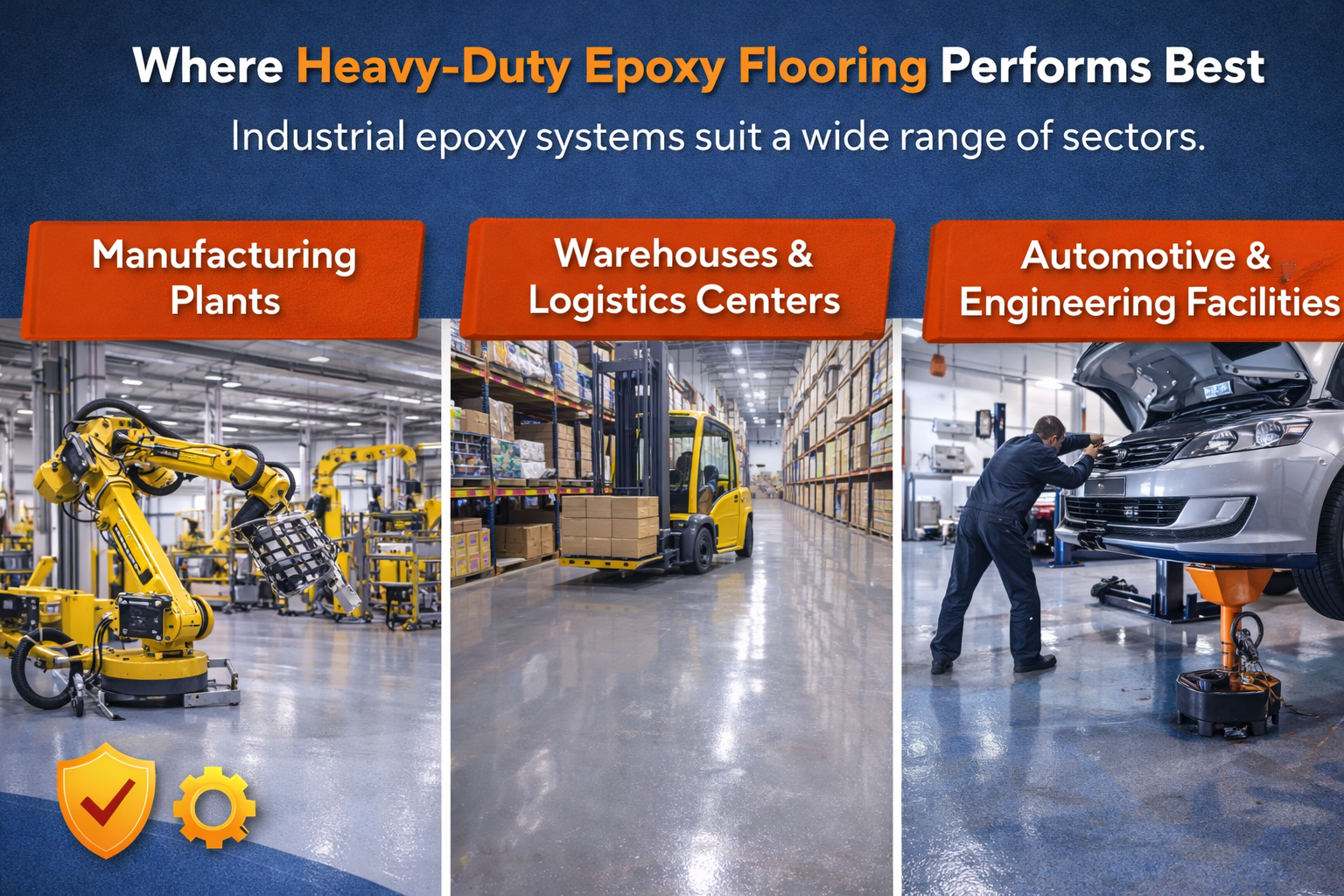
Where Heavy-Duty Epoxy Flooring Performs Best
Industrial epoxy systems suit a wide range of sectors. Each industry benefits from strong, seamless flooring that resists damage and simplifies maintenance.
Manufacturing Plants
Manufacturing units handle heavy machinery and continuous movement. Consequently, floors must support weight and resist oil or chemical spills. Epoxy coatings provide strength and easy cleaning, which improves efficiency and safety.
Warehouses and Logistics Centers
Warehouses experience constant forklift traffic and heavy pallet loads. Without protection, concrete surfaces crack and deteriorate quickly. However, epoxy systems strengthen the floor and reduce dust. As a result, operations remain smooth and safe.
Automotive and Engineering Facilities
Automotive workshops deal with oils, lubricants, and mechanical wear. Epoxy surfaces resist stains and chemicals. In addition, they improve visibility with bright finishes. Therefore, technicians work more safely and efficiently.
Food and Pharmaceutical Units
Hygiene plays a critical role in the food and pharma industries. Seamless epoxy floors prevent bacterial growth and allow easy cleaning. Moreover, they comply with safety standards and maintain sanitation.
How Floor Coating Improves Safety and Productivity
Industrial flooring influences safety, workflow, and overall productivity. Therefore, businesses must choose surfaces that support operational efficiency.
Slip Resistance and Workplace Safety
Anti-slip additives can be integrated into epoxy coatings. As a result, floors remain safe even in wet or oily conditions. Workers move confidently, and accidents are reduced. Consequently, companies maintain safer environments and fewer disruptions.
Bright and Reflective Surfaces
Light-colored epoxy coatings reflect light effectively. Therefore, facilities become brighter without additional lighting. Improved visibility supports safer operations and better inspection processes.
Reduced Maintenance and Downtime
Epoxy surfaces are easy to clean and maintain. Because they resist stains and dust, cleaning becomes faster and more efficient. As a result, businesses reduce downtime and maintain productivity.
Installation Process for Industrial Epoxy Flooring
Proper installation determines the performance of any coating system. Therefore, professional application ensures long-lasting results.
Surface Preparation
Installers clean and grind the concrete surface. This step removes dust, grease, and old coatings. Consequently, the primer bonds strongly with the substrate. Without preparation, the system may fail.
Priming and Base Coating
After preparation, the epoxy primer is applied. It penetrates deeply and seals the surface. Next, build coats create thickness and strength. These layers form the core of the system.
Topcoat and Finishing
Finally, topcoats provide protection and aesthetics. Anti-slip additives and color finishes are added at this stage. Once cured, the floor becomes ready for heavy use.
Because installation requires expertise, businesses should always work with experienced contractors.
Choosing the Right Floor Coating for Industrial Needs
Every facility has unique requirements. Therefore, selecting the right system involves careful planning and evaluation.
Assessing Load and Traffic
Heavy machinery requires thicker coatings. High-traffic areas need abrasion-resistant systems. Therefore, understanding operational conditions helps determine the best solution.
Chemical Exposure Considerations
Facilities exposed to chemicals require resistant coatings. Epoxy systems can be customized to withstand acids, oils, and solvents. As a result, the floor remains protected.
Budget and Lifecycle Cost
Although epoxy systems require investment, they reduce long-term maintenance costs. Therefore, businesses benefit from lower repair expenses and longer service life.
Long-Term Benefits of Epoxy Flooring Systems
Future Trends in Industrial Epoxy Flooring
Epoxy flooring provides value beyond durability. Businesses gain operational efficiency and improved workplace conditions.
Cost Savings Over Time
A strong floor reduces repair and replacement costs. Because epoxy systems last longer, companies save money over time. In addition, maintenance becomes easier and less expensive.
Improved Appearance and Branding
Modern industrial facilities value appearance as well as performance. Epoxy coatings create clean, professional spaces. Furthermore, color-coded zones improve organization and safety.
Environmental and Safety Benefits
Solvent-free systems reduce emissions and improve indoor air quality. As a result, facilities maintain safer environments for employees.
Technology continues to improve industrial flooring systems. New materials enhance performance, durability, and sustainability.
Advanced Coating Formulations
Manufacturers now produce high-performance epoxy systems with improved chemical resistance. These coatings last longer and perform better under extreme conditions.
Decorative and Functional Finishes
Industrial spaces increasingly use decorative finishes for branding and organization. Color zones, markings, and safety lines improve workflow and safety.
Sustainable Flooring Solutions
Many industries now prefer low-VOC and solvent-free products. These systems support environmental goals while maintaining performance.
Modern Floor Coating Trends for Industrial Use
Industrial facilities require flooring that withstands pressure, traffic, and chemicals. Therefore, choosing a reliable epoxy system ensures long-term performance and safety. With proper installation and maintenance, epoxy coatings protect concrete surfaces and improve efficiency.
Businesses that invest in quality flooring solutions benefit from reduced downtime, improved safety, and long-lasting durability. Consequently, epoxy systems remain one of the most effective choices for heavy-duty industrial environments.
When selecting a flooring partner, consider experience, materials, and system design. A well-planned installation delivers lasting results and supports industrial growth. Ultimately, strong floors support strong operations, and epoxy solutions continue to lead the way in modern industrial flooring.