


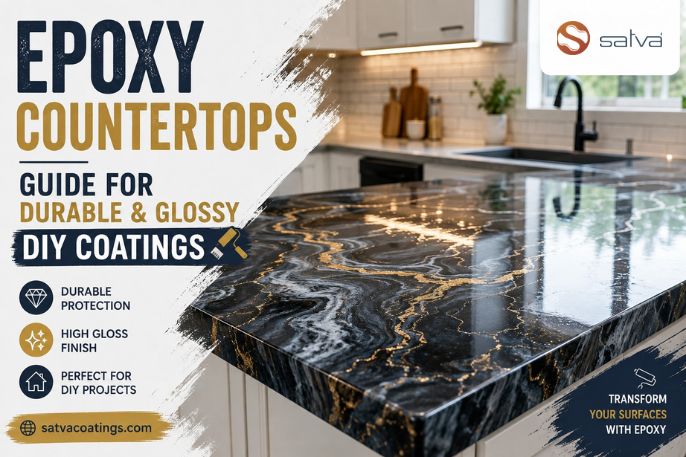
Epoxy countertops offer an attractive way to transform an ordinary kitchen, bathroom, workshop, or commercial counter into a smooth and glossy surface. With the right preparation and application technique, homeowners and DIY enthusiasts can create a durable finish without completely replacing the existing Epoxy countertops.
Unlike traditional countertop materials, epoxy resin can create a seamless surface with a high-gloss appearance. It can also refresh worn or outdated surfaces and provide a decorative finish that suits modern interiors.
However, achieving a professional result requires more than simply pouring resin over a counter. Surface preparation, product selection, mixing, application, curing, and maintenance all affect the final result.
This complete guide explains how epoxy countertops work, how to choose the right coating, how to apply it, and what you should know before starting a DIY countertop project.
What Are Epoxy Countertops?
Epoxy countertops use a specially formulated resin system that creates a hard, smooth, and glossy surface over an existing countertop. The material typically consists of a resin and hardener that react chemically after mixing.
Once cured, the coating forms a continuous surface with minimal seams. As a result, it can give old laminate, wood, concrete, or other suitable countertop surfaces a completely different appearance.
Many homeowners choose this solution because it combines decorative appeal with surface protection. In addition, users can create solid colors, metallic effects, marble-like patterns, or other custom designs.
How Does Countertop Epoxy Work?
A typical epoxy system contains two components:
- Epoxy resin
- Hardener or curing agent
When you mix these components in the correct ratio, a chemical reaction begins. The mixture gradually changes from a liquid into a solid coating.
Therefore, accurate measuring and thorough mixing remain essential. Incorrect ratios can cause soft spots, poor curing, bubbles, or an uneven finish.
Why Are Epoxy Countertops Popular?
DIY countertop projects have become popular because epoxy can dramatically change the appearance of an existing surface without requiring a complete replacement.
The main attractions include:
- High-gloss appearance
- Seamless finish
- Decorative customization
- Easy-to-clean surface
- Good surface protection
- Renovation without full countertop replacement
- Wide range of colors and effects
Moreover, a properly selected system can provide a durable surface for many residential and decorative applications.
Key Benefits of Epoxy Countertop Coating
An epoxy countertop coating can offer both aesthetic and practical advantages. However, the actual performance depends on the formulation, substrate, preparation, application, and curing conditions.
Creates a High Gloss Finish
One of the biggest reasons people choose epoxy is its glossy appearance. A well-applied coating can create a smooth reflective surface that gives countertops a premium look.
Glossy epoxy countertops can also make colors and decorative patterns appear deeper and more vibrant. For example, metallic pigments can produce dramatic visual effects, while carefully blended colors can mimic natural stone.
Protects the Existing Countertop
A suitable epoxy resin coating can add a protective layer over the underlying surface. This helps reduce exposure to everyday wear, moisture, stains, and minor surface damage.
However, epoxy should not automatically be considered indestructible. Heavy impact, sharp objects, excessive heat, or unsuitable chemicals can still damage the finish.
Provides a Seamless Appearance
Traditional countertops often contain joints or seams. Epoxy can cover a properly prepared surface with a continuous coating, creating a cleaner visual appearance.
Consequently, the finished counter can look more modern and uniform.
Offers Decorative Flexibility
DIY epoxy countertops provide considerable design freedom. You can use pigments, metallic powders, decorative flakes, or artistic techniques to create different effects.
For instance, a marble-inspired design can combine several shades with carefully controlled veins. Alternatively, a solid color can create a simple contemporary appearance.
Makes Cleaning Easier
A smooth, properly cured epoxy countertop finish generally makes routine cleaning straightforward. Dirt and spills have fewer places to collect compared with heavily textured surfaces.
Still, always follow the coating manufacturer’s cleaning recommendations to protect the finish.
Choosing the Right Epoxy for Countertops
Not every epoxy product works equally well for countertop applications. Product selection matters because countertops experience different conditions from floors, walls, and industrial equipment.
Before purchasing an epoxy countertop kit, consider the intended use, substrate, temperature exposure, appearance, curing requirements, and chemical resistance.
Look for a Suitable Countertop Formulation
Choose a product specifically designed or recommended for countertop and decorative surface applications.
A suitable formulation should provide good flow, appearance, adhesion, and curing performance. It should also match the substrate you plan to coat.
Consider the Desired Finish
Think about the appearance before beginning the project.
You may prefer:
- Clear high-gloss finish
- Solid color
- Marble effect
- Metallic effect
- Stone-inspired appearance
- Custom artistic pattern
A clear system works well when you want to highlight a decorative base. Meanwhile, pigmented systems provide more control over the final color.
Check Application and Curing Requirements
Read the technical information before starting. Pay attention to:
- Mixing ratio
- Pot life
- Recommended thickness
- Application temperature
- Recoat time
- Curing time
- Surface preparation requirements
Following these instructions helps prevent avoidable application problems.
Common Mistakes to Avoid With Epoxy Kitchen Countertops
Even a high-quality product can produce disappointing results when the application process goes wrong.
Skipping Surface Preparation
Poor preparation can cause adhesion problems, contamination marks, peeling, or an uneven finish.
Always clean, repair, and profile the substrate before coating.
Using Incorrect Mixing Ratios
Adding extra hardener does not necessarily make epoxy cure faster or harder. In fact, an incorrect ratio can interfere with the chemical reaction.
Measure both components accurately.
Mixing Too Aggressively
Fast mixing can introduce excessive air into the resin. Those bubbles may become visible after curing.
Instead, mix thoroughly but steadily.
Applying Too Much Material
More epoxy does not automatically mean greater durability. Excessive thickness can create curing problems, overheating, sagging, or other defects depending on the formulation.
Follow the manufacturer’s recommended thickness.
Ignoring Temperature and Humidity
Environmental conditions can influence viscosity, flow, curing, and final appearance.
For this reason, check the technical data sheet and maintain suitable application conditions.
Touching the Surface During Curing
Fingerprints, dust, insects, and objects can leave permanent marks while the coating remains soft.
Keep the area protected until the surface reaches the required cure stage.
Epoxy Countertops vs Traditional Countertop Materials
Epoxy provides a different combination of design flexibility and surface protection compared with traditional countertop materials.
Laminate countertops can offer affordability and many decorative patterns. Natural stone provides a premium appearance and strong physical performance. Solid-surface materials can offer seamless designs and repairability.
Epoxy, meanwhile, focuses heavily on renovation flexibility. It can transform an existing surface while allowing users to customize colors and patterns.
Therefore, the best choice depends on the application, budget, design expectations, maintenance requirements, and performance needs.
How to Maintain a Durable Epoxy Countertop Finish
Proper maintenance can help preserve the appearance of the coating.
Use Gentle Cleaning Methods
Clean the surface regularly with a mild cleaner recommended by the coating manufacturer. Avoid aggressive chemicals unless the product specifically supports them.
Prevent Excessive Heat
Do not assume that a glossy surface can withstand unlimited heat. Hot cookware can exceed the temperature tolerance of many countertop coating systems.
Use suitable trivets or heat-resistant pads where necessary.
Avoid Cutting Directly on the Surface
Sharp knives can scratch or damage the coating. Always use a cutting board.
Clean Spills Promptly
Although a properly cured coating can resist many common spills, prompt cleaning reduces the chance of staining or chemical damage.
Inspect the Surface Regularly
Look for scratches, chips, impact damage, or areas showing wear. Early attention can help prevent minor damage from becoming a larger repair.
How Long Do Epoxy Countertops Last?
The service life of a coated countertop depends on several factors, including product quality, substrate preparation, coating thickness, curing, usage, maintenance, heat exposure, impact, and chemical contact.
A well-prepared surface and correctly applied coating generally perform better than a poorly prepared DIY installation.
Consequently, durability starts before the epoxy reaches the countertop.
Are Epoxy Countertops Worth It?
For many renovation projects, epoxy offers an appealing balance between appearance, customization, and surface protection.
It can refresh an outdated counter without the cost and disruption of a complete replacement. Furthermore, the ability to create unique colors and patterns makes it attractive for homeowners who want something different from conventional materials.
If your priority is a highly customizable, glossy renovation finish, epoxy can be an excellent option. If your project involves extreme heat, heavy industrial impact, or unusual chemical exposure, evaluate the coating specification carefully before choosing it.
Final Thoughts on Epoxy Countertops
Epoxy countertops can turn an ordinary surface into a smooth, glossy, and visually distinctive feature. The coating provides excellent creative flexibility, while proper preparation and application help achieve a durable result.
The most important step is not simply choosing a beautiful color. Instead, focus on selecting the right formulation, preparing the substrate correctly, measuring the components accurately, controlling the application environment, and allowing sufficient curing time.
For homeowners and DIY enthusiasts, these steps can make the difference between an attractive countertop renovation and a costly coating failure.
If you are evaluating epoxy resin countertops for a residential, commercial, or decorative project, choose a coating system based on the surface requirements and expected service conditions.
FAQ Section
1.Can you put epoxy over an existing countertop?
Yes, epoxy can be applied over certain existing countertop materials when the substrate is sound and properly prepared. Cleaning, sanding, repairing imperfections, and removing contaminants are essential before application.
2. What is the best epoxy for countertops?
The best product depends on the substrate, intended use, appearance, thickness, temperature exposure, and performance requirements. Select a formulation designed or recommended for countertop applications rather than using a general-purpose resin without checking its technical suitability.
3.How do you get a glossy epoxy countertop?
A glossy result requires a suitable high-gloss formulation, smooth preparation, correct mixing, controlled application, bubble management, and proper curing. Dust and contamination should also remain controlled throughout the process.
4. Are DIY epoxy countertops durable?
A correctly selected and applied system can provide a durable countertop surface. However, durability depends on preparation, product formulation, curing, maintenance, heat exposure, impact, and everyday use.
5. Can epoxy be used on kitchen countertops?
Yes, suitable epoxy systems can be used for kitchen countertop applications. However, users should verify heat resistance, chemical resistance, cleaning requirements, and any food-contact suitability claims before selecting a product.
6. How do you maintain epoxy kitchen countertops?
Use recommended gentle cleaning methods, avoid excessive heat, prevent direct cutting on the surface, clean spills promptly, and follow the manufacturer’s maintenance instructions.