

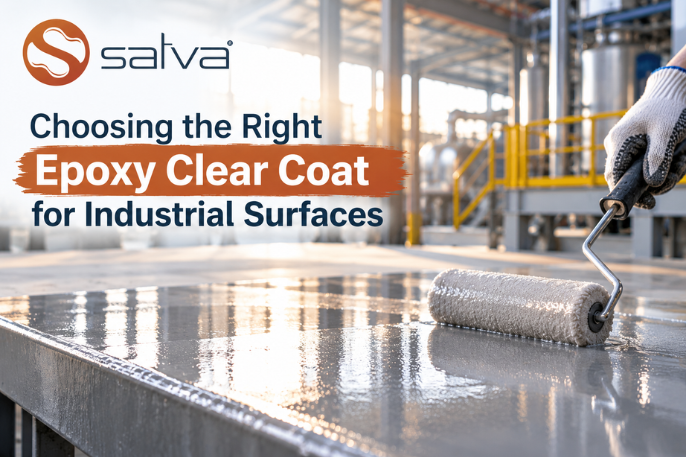
Industrial surfaces face demanding conditions every day. Heavy traffic, moisture, chemicals, abrasion, dust, temperature changes, and continuous handling can gradually reduce the appearance and performance of metal, concrete, and other substrates. Therefore, selecting the right protective coating is an important part of maintaining a durable and attractive surface.
An Epoxy Clear Coat can provide a transparent protective layer while allowing the original surface, texture, color, or decorative finish to remain visible. However, not every clear coating suits every industrial application. The right choice depends on the surface material, expected traffic, chemical exposure, environmental conditions, finish requirements, and long-term maintenance needs.
Moreover, industrial users should consider more than appearance when choosing a clear protective system. A coating should provide dependable adhesion, surface protection, durability, and compatibility with the existing substrate. When these factors work together, the coating can help extend surface life and reduce frequent repair or recoating requirements.
This guide explains how to evaluate an industrial epoxy clear coat, where it works best, what benefits it can provide, and which factors should influence your final selection.
Why Choosing the Right Epoxy Clear Coat Matters
Industrial coating requirements vary significantly from one facility to another. For example, a warehouse floor may experience forklift traffic and abrasion, while a metal component may face moisture, chemicals, or outdoor exposure. Consequently, the coating system must match the actual working environment.
A suitable epoxy clear coating creates a protective barrier over the substrate. In addition, it can enhance the visual appearance of a properly prepared surface. Depending on the formulation, the finished layer may offer resistance against common industrial stresses while maintaining a clean and professional appearance.
Understanding Industrial Surface Conditions
Before selecting a coating, examine the conditions that the surface will experience.
First, identify whether the substrate consists of concrete, steel, aluminum, or another compatible material. Next, consider the level of mechanical stress, exposure to liquids, chemical contact, sunlight, moisture, and temperature fluctuations.
For example, a factory floor with frequent vehicle movement requires stronger abrasion performance than a lightly used interior surface. Similarly, a metal structure exposed to moisture needs a coating system that works effectively with the existing primer and surface preparation.
Therefore, surface evaluation should always come before product selection.
Key Performance Factors to Consider
Several technical factors influence coating performance:
- Adhesion to the existing surface
- Resistance to abrasion and mechanical wear
- Chemical exposure
- Moisture and environmental conditions
- Expected service temperature
- Surface preparation requirements
- Compatibility with existing coatings
- Desired gloss and appearance
- Application method
- Maintenance requirements
Furthermore, the expected service life should influence your decision. Choosing a coating solely because it looks attractive may result in poor performance if the product does not match the operating environment.
Surface Compatibility and Adhesion
Good adhesion provides the foundation for a successful coating system. A clear finish cannot compensate for weak preparation or an incompatible base layer.
Before application, remove contaminants such as oil, grease, dust, loose particles, rust, and other materials that can interfere with adhesion. Depending on the substrate, mechanical preparation, cleaning, sanding, grinding, or other suitable methods may improve surface readiness.
The existing primer or basecoat also matters. Always check compatibility between the clear finish and the underlying coating system.
Chemical and Abrasion Resistance
Industrial environments often expose surfaces to oils, cleaning agents, solvents, chemicals, and other substances. At the same time, movement from workers, equipment, pallets, vehicles, and machinery can create continuous mechanical wear.
For these conditions, a chemical resistant epoxy coating can help protect suitable surfaces from common industrial exposure. Likewise, an abrasion resistant epoxy coating can be valuable in areas where repeated movement or friction occurs.
However, resistance varies by formulation and exposure conditions. Therefore, users should review technical specifications and confirm suitability for the specific chemicals, temperatures, and operating conditions involved.
Appearance and Finish Requirements
A transparent coating can preserve the visual character of a properly prepared surface. It may also provide a clean, glossy, or uniform appearance depending on the selected product and application process.
For decorative concrete, industrial floors, metal components, and finished surfaces, appearance can be an important consideration. Nevertheless, appearance should complement—not replace—the required performance characteristics.
How to Select the Best Epoxy Clear Coat
Selecting the right product becomes easier when you follow a systematic approach. Instead of choosing a coating based only on price or gloss level, evaluate the complete application environment.
Match the Coating to the Substrate
The first step involves identifying the substrate.
Concrete floors, steel structures, metal equipment, and previously coated surfaces have different preparation and adhesion requirements. Therefore, a product designed for one substrate may not automatically provide the same results on another.
For concrete, consider porosity, moisture, surface profile, traffic, and existing floor coatings. For metal, evaluate corrosion, surface cleanliness, existing primers, and environmental exposure.
An epoxy coating for metal surfaces may provide a useful protective finish when correctly selected and applied as part of a compatible coating system. Similarly, an epoxy coating for concrete floors can help improve surface protection in suitable industrial and commercial environments.
Evaluate the Industrial Environment
Next, study how the surface will be used.
A manufacturing facility may have oil contamination, chemical splashes, heavy machinery, and continuous foot or vehicle traffic. In contrast, an equipment room may require more emphasis on cleanliness, moisture resistance, and appearance.
Consider these questions before making a decision:
- Will forklifts or heavy vehicles travel across the surface?
- Will workers regularly move equipment over it?
- Could oils or chemicals contact the coating?
- Is the area exposed to water or humidity?
- Will the surface experience outdoor weather?
- Does the project require a glossy or low-sheen appearance?
- How frequently will the surface require cleaning?
By answering these questions, you can narrow down the coating characteristics that matter most.
Consider Application and Maintenance
A high-quality coating still requires correct application. Surface preparation, mixing, application thickness, curing conditions, and environmental factors can influence the final result.
For this reason, follow the manufacturer’s technical data sheet and application recommendations. Use suitable tools and maintain the recommended application conditions.
After installation, regular cleaning can also help maintain the appearance and performance of the coated surface. Avoid harsh cleaning methods or chemicals unless the coating manufacturer confirms their compatibility.
Why Proper Surface Preparation Matters
Surface preparation often determines whether a coating system performs as expected.
A clean and properly prepared substrate allows the coating to establish stronger contact with the surface. Conversely, contaminants or loose materials can create weak areas, leading to premature peeling, blistering, or loss of adhesion.
For that reason, preparation should never become an afterthought. It forms an essential part of the complete coating process.
Selecting the Appropriate Film and Finish
Film thickness also influences coating performance. Applying too little material may reduce protection, while excessive application can create application or curing problems.
Therefore, follow the product’s recommended coverage and thickness requirements rather than relying on visual appearance alone.
Finish selection also deserves attention. A glossy finish can improve visual appeal and make certain surfaces appear cleaner, while other applications may prioritize a different appearance.
Consider Long-Term Value
The lowest initial cost does not always represent the best overall value.
A coating that requires frequent repairs can increase labor, downtime, and maintenance expenses. Conversely, a properly selected durable epoxy coating can support longer service intervals when the substrate, environment, preparation, and application process are suitable.
Thus, evaluate the complete lifecycle rather than comparing purchase price alone.
Where Epoxy Clear Coatings Work Best
Clear protective systems can serve a variety of industrial and commercial applications. However, suitability always depends on the formulation and project conditions.
Common applications include:
- Industrial and commercial floors
- Concrete surfaces
- Metal components
- Machinery areas
- Workshops
- Warehouses
- Manufacturing facilities
- Equipment rooms
- Decorative industrial surfaces
- Previously coated compatible substrates
In addition, a clear finish can complement an existing coating system where transparency and surface protection are both important.
Benefits of Using an Epoxy Protective Coating
A properly selected epoxy protective coating can provide several practical advantages for suitable industrial surfaces.
First, it can create an additional protective barrier over the substrate. This barrier can help reduce the impact of everyday wear and environmental exposure.
Second, a clear finish can improve the visual consistency of a surface while maintaining the appearance underneath. That feature makes transparent systems useful when users want protection without completely covering the original finish.
Improved Industrial Surface Protection
Industrial surfaces often require protection against repeated mechanical and environmental stress. A suitable coating can help create a more durable surface and support easier maintenance.
Moreover, coated surfaces may become easier to clean when the finish creates a smooth, continuous surface. This can be particularly useful in workshops, production areas, and other locations where cleanliness matters.
Better Resistance to Everyday Wear
Abrasion represents a common challenge in busy industrial environments. Foot traffic, wheeled equipment, moving components, and repeated cleaning can gradually affect untreated or inadequately protected surfaces.
Consequently, selecting a coating with appropriate wear resistance can support longer-lasting surface performance.
Enhanced Surface Appearance
Protection and appearance can work together. A clear finish can provide a neat, professional look while preserving the underlying color or texture where the substrate allows it.
This advantage can matter in customer-facing facilities, showrooms, commercial spaces, and professionally maintained industrial environments.
Support for Easier Maintenance
Maintenance teams often prefer surfaces that can be cleaned without excessive effort. A suitable coating can help create a smoother surface that supports routine cleaning.
However, cleaning products should always match the coating manufacturer’s recommendations. This approach helps reduce the risk of unnecessary surface damage.
Industrial Floors
Industrial floors face some of the most demanding conditions. Forklifts, carts, machinery, foot traffic, spills, and cleaning operations can create continuous stress.
A suitable epoxy coating for concrete floors can provide a protective finish for compatible concrete surfaces. However, the floor must first receive proper preparation, and moisture conditions should be assessed before coating.
Metal Components and Structures
Metal surfaces can benefit from protective coating systems when they face moisture, industrial contaminants, and mechanical exposure.
A suitable system can work alongside primers and other layers to create a complete protective approach. Therefore, users should evaluate the entire coating system instead of treating the clear layer as an independent solution.
Workshops and Manufacturing Areas
Workshops often combine mechanical activity, oil exposure, dust, equipment movement, and frequent cleaning. As a result, coating selection should focus on durability, adhesion, chemical exposure, and maintenance requirements.
A well-planned coating system can help create a cleaner and more professional working environment.
Epoxy Countertops vs Traditional Countertop Materials
Epoxy provides a different combination of design flexibility and surface protection compared with traditional countertop materials.
Laminate countertops can offer affordability and many decorative patterns. Natural stone provides a premium appearance and strong physical performance. Solid-surface materials can offer seamless designs and repairability.
Epoxy, meanwhile, focuses heavily on renovation flexibility. It can transform an existing surface while allowing users to customize colors and patterns.
Therefore, the best choice depends on the application, budget, design expectations, maintenance requirements, and performance needs.
Why Professional Product Selection Matters
Industrial coating projects often involve valuable equipment, large floor areas, or critical infrastructure. Therefore, product selection should receive careful attention.
A coating specialist can help evaluate substrate conditions, environmental exposure, application requirements, and expected service performance. This process can reduce the risk of choosing a product that does not match the actual application.
Furthermore, technical data sheets provide important information about recommended substrates, coverage, curing, application methods, and resistance properties.
Make the Right Choice for Long-Lasting Surface Protection
Choosing the right Epoxy Clear Coat requires more than selecting a transparent finish. The best solution begins with understanding the substrate and continues with careful evaluation of traffic, chemicals, abrasion, moisture, temperature, appearance, application requirements, and maintenance.
An industrial epoxy clear coat can become an important part of a broader surface protection strategy when the formulation matches the application. Furthermore, proper preparation and application play an equally important role in achieving reliable results.
For industrial users, the smartest approach is simple: identify the surface, understand the environment, define the required performance, and then select the coating accordingly. By following this process, businesses can make more informed coating decisions and support durable, professional-looking surfaces for demanding applications.
FAQ Section
1.What is an Epoxy Clear Coat?
It is a transparent protective coating designed for suitable surfaces where users want protection while retaining the appearance of the underlying substrate or coating. Its performance depends on formulation, preparation, application, and service conditions.
2. Is Epoxy Clear Coat suitable for industrial floors?
Yes, suitable formulations can be used on compatible industrial floors. However, the product should match the floor material, traffic level, chemical exposure, moisture conditions, and required performance.
3.Can it be applied to metal surfaces?
Some formulations are suitable for metal surfaces when the substrate receives proper preparation and the coating system is compatible. Always verify product recommendations before application.
4. Does it provide chemical resistance?
Certain formulations provide chemical resistance against specified substances. However, resistance differs between products, so users should check technical data before exposing the coating to aggressive chemicals.
5. How important is surface preparation?
Surface preparation is extremely important. Removing contaminants and creating the appropriate surface condition helps improve adhesion and supports more reliable coating performance.
6. How can I choose the right industrial epoxy clear coat?
Start by evaluating the substrate, traffic, abrasion, chemical exposure, moisture, temperature, appearance, application conditions, and maintenance requirements. Then select a product whose technical properties match those conditions.