

Metal structures face continuous exposure to moisture, oxygen, chemicals, salts, and changing environmental conditions. Over time, these factors can trigger corrosion, weaken the surface, and reduce the service life of valuable equipment. Therefore, industries need a reliable protective coating system before applying their final paint finish.
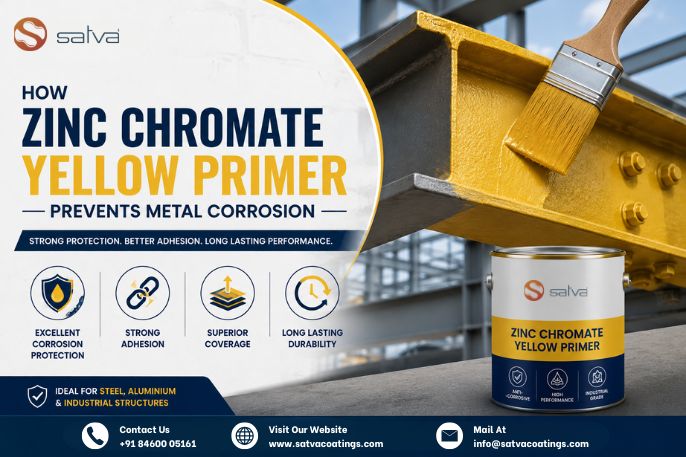
Zinc chromate yellow primer has traditionally been used as a protective primer for metal surfaces where strong adhesion and corrosion resistance are important. Its characteristic yellow finish makes the primer easy to identify, while its formulation helps create a protective barrier between the metal substrate and corrosive elements.
From steel structures and aluminum components to industrial equipment and fabricated metal parts, the right primer can significantly improve coating performance. However, achieving long-term protection requires more than simply applying a primer. Surface preparation, correct application, compatible topcoats, and proper curing all play an important role.
This guide explains how zinc chromate primer works, its major benefits, applications, application process, limitations, and important considerations when selecting an industrial metal primer.
What Is Zinc Chromate Primer and How Does It Work?
Zinc chromate primer is a corrosion-protective coating designed to prepare metal surfaces for subsequent paint layers. The primer contains zinc chromate pigments within a resin-based coating system. These pigments have historically provided corrosion-inhibiting properties while also supporting adhesion between the metal substrate and finishing coat.
When applied correctly, the primer creates a protective interface over the prepared metal. Consequently, moisture and other corrosive elements have a more difficult path toward the substrate.
A typical protective coating system may include the following:
- Prepared metal substrate
- Zinc chromate primer
- Intermediate protective coating, where required
- Compatible finishing coat
The primer therefore acts as an important foundation rather than serving as the complete coating system.
How the Primer Helps Control Corrosion
Corrosion generally requires conditions that allow the metal to react with its environment. Moisture, oxygen, salts, and contaminants can accelerate this process.
A properly applied primer helps by:
- Creating a protective barrier
- Improving coating adhesion
- Reducing direct exposure of metal to the environment
- Supporting corrosion control
- Providing a suitable base for subsequent coats
As a result, the complete coating system can provide more dependable metal corrosion protection than an unprotected metal surface.
Why Surface Preparation Matters
Even the best primer cannot compensate for poor surface preparation.
Before application, the metal should be free from:
- Rust
- Mill scale
- Oil
- Grease
- Dust
- Moisture
- Loose old coatings
- Other surface contaminants
Proper metal surface preparation improves adhesion and reduces the risk of premature coating failure.
How Zinc Chromate Yellow Primer Protects Metal
The performance of any corrosion-resistant primer depends on both its formulation and the coating process. When the substrate receives proper preparation and the primer forms a continuous film, it establishes an important protective layer between the metal and the surrounding environment.
Corrosion Protection for Steel and Metal
Steel remains widely used across manufacturing, engineering, construction, machinery, and infrastructure. However, untreated steel can corrode rapidly when exposed to moisture and aggressive environments.
A suitable primer helps establish the first protective layer before the final coating system is installed.
This makes a zinc chromate primer for steel useful in applications where corrosion protection and coating adhesion are important.
For example, industrial components may experience the following:
- Humidity
- Outdoor exposure
- Industrial fumes
- Salt contamination
- Chemical contact
- Temperature changes
Therefore, selecting an appropriate industrial metal primer can help extend the performance of the complete paint system.
Strong Adhesion Between Metal and Topcoat
Adhesion plays a critical role in protective painting.
If the finishing coat does not bond properly, moisture can penetrate beneath the coating. Eventually, this may cause blistering, peeling, flaking, or corrosion beneath the paint film.
A quality primer creates a suitable foundation for the next coating layer. In turn, this supports stronger adhesion and improves the overall durability of the paint system.
Protection Against Environmental Exposure
Metal surfaces can encounter rain, humidity, condensation, airborne contaminants, and industrial pollutants.
A properly designed primer system reduces direct contact between the substrate and these external factors.
However, performance depends on the complete coating specification. For severe environments, industries should select a primer and topcoat combination based on exposure conditions, substrate type, and manufacturer recommendations.
Zinc Chromate Primer for Aluminum Surfaces
Aluminum behaves differently from steel because it naturally develops a thin oxide layer. Even so, achieving strong paint adhesion can present challenges.
A suitable primer can improve the bonding between aluminum and subsequent coatings.
Therefore, zinc chromate primer for aluminum has historically been used in applications where aluminum components require a suitable protective and paintable surface.
Before application, however, the coating manufacturer should confirm compatibility with the particular aluminum alloy, substrate preparation method, and intended topcoat.
Better Foundation for Protective Coating Systems
A primer should work as part of a complete coating system.
For example:
Metal Surface → Surface Preparation → Primer → Intermediate Coat → Topcoat
Each layer serves a specific purpose. The primer promotes adhesion and initial corrosion protection, while additional coats can provide enhanced resistance to weather, chemicals, abrasion, or other operating conditions.
Key Benefits of Zinc Chromate Yellow Primer
Choosing the right primer can influence the service life and appearance of an entire paint system. Zinc chromate primer has several historical advantages that made it popular in demanding metal-coating applications.
Corrosion-Resistant Performance
One of its primary purposes is corrosion control.
The primer provides a protective layer that helps reduce exposure of the metal to environmental conditions. When combined with appropriate surface preparation and compatible topcoats, it can contribute to a durable anti-corrosion primer system.
Excellent Base for Topcoats
A primer provides the foundation for subsequent paint layers.
When the coating system is properly selected, the primer helps the topcoat achieve better adhesion and more consistent performance.
This is especially important for industrial equipment, fabricated components, and metal structures that require long-term protection.
Suitable for Industrial Metal Protection
Industrial environments can expose metal to demanding conditions. Consequently, coating systems need to provide dependable protection while maintaining good adhesion and finish quality.
A suitable protective primer for metal can support applications across manufacturing, engineering, fabrication, and maintenance industries.
Helps Improve Coating System Durability
A strong coating system does not depend on one layer alone.
Instead, durability comes from:
- Proper substrate preparation
- Correct primer selection
- Suitable film thickness
- Compatible intermediate coatings
- Appropriate topcoat selection
- Correct curing conditions
- Regular inspection and maintenance
When these factors work together, the coating system can deliver more reliable long-term performance.
Supports Better Surface Uniformity
Primer application also helps create a consistent foundation for finishing coats.
A properly prepared and primed surface can improve the appearance and uniformity of the final coating. Additionally, it can reduce the risk of uneven adhesion and localized coating defects.
Industrial Applications of Zinc Chromate Primer
Different industries use metal primers according to their substrate, environment, and performance requirements.
Engineering and Fabrication
Fabricated steel and aluminum components often require protective coating before they enter service.
Primer systems can help protect components during storage, transportation, and operation.
Machinery and Equipment
Industrial machinery may encounter moisture, oils, dust, and mechanical wear.
A suitable industrial anti-corrosion coating system can provide a protective foundation for equipment exposed to these conditions.
Metal Structures
Steel structures require protection against atmospheric exposure.
A primer combined with a suitable topcoat can help reduce corrosion risk and extend maintenance intervals.
Automotive and Transportation Components
Metal components in transportation applications may experience humidity, road contaminants, and environmental exposure.
A compatible primer system can improve adhesion and support long-term surface protection.
Aluminum Components
Aluminum panels, fabricated parts, and specialized components may require a primer to improve coating adhesion before applying a compatible finish.
How to Apply Zinc Chromate Yellow Primer Correctly
Correct application is just as important as product selection. Even a high-quality primer can fail when the substrate receives inadequate preparation or the coating does not follow the recommended application parameters.
Step 1: Inspect the Metal Surface
First, inspect the substrate for rust, old coatings, oil, grease, moisture, and other contaminants.
Identify damaged areas before beginning the coating process.
Step 2: Clean and Prepare the Surface
Remove contaminants using an appropriate cleaning and preparation method.
Depending on the substrate and project specification, mechanical abrasion, grinding, blasting, or other approved preparation methods may be required.
The final surface should meet the cleanliness and profile requirements specified for the coating system.
Step 3: Mix the Primer Properly
Follow the manufacturer’s instructions for mixing and thinning.
Do not add excessive thinner or alter the formulation without technical guidance. Incorrect mixing can affect adhesion, drying, film formation, and corrosion protection.
Step 4: Apply an Even Coat
Apply the primer using an approved application method such as spray, brush, or roller, depending on the product specification.
Maintain consistent coverage and avoid excessive application thickness.
Step 5: Allow Proper Drying and Curing
Allow the primer to dry according to the manufacturer’s recommended conditions.
Temperature, humidity, ventilation, substrate condition, and film thickness can influence drying time.
Step 6: Apply the Compatible Topcoat
Once the primer reaches the appropriate recoat condition, apply the recommended finishing system.
Always check compatibility between the primer, intermediate coat, and topcoat before beginning the project.
Factors to Consider Before Choosing a Metal Primer
Not every primer suits every metal surface or operating environment.
Before selecting a product, evaluate:
- Substrate type
- Indoor or outdoor exposure
- Humidity
- Chemical exposure
- Temperature
- Required durability
- Topcoat compatibility
- Surface preparation method
- Application equipment
- Required maintenance interval
A professional coating specification can help determine the appropriate system.
Zinc Chromate Primer vs. Zinc Phosphate Primer
Zinc chromate and zinc phosphate primers both belong to the broader category of corrosion-protective primers, but they are not interchangeable in every application.
Historically, zinc chromate formulations gained popularity because of their corrosion-inhibiting performance and adhesion characteristics. However, chromate pigments raise significant health, safety, and environmental concerns because hexavalent chromium compounds can be hazardous.
Zinc phosphate primers provide a widely used alternative for many modern industrial coating systems.
Therefore, the choice should depend on the following:
- Substrate
- Exposure conditions
- Required performance
- Regulatory requirements
- Project specifications
- Environmental considerations
- Compatibility with the complete coating system
Important Safety Consideration
Because zinc chromate pigments can involve hazardous hexavalent chromium compounds, businesses should follow applicable occupational safety, environmental, storage, handling, disposal, and regulatory requirements.
Where regulations or project specifications restrict chromate-containing coatings, an appropriate chromate-free alternative should be considered.
Always review the current Safety Data Sheet and technical documentation before handling or applying the product.
How to Get Better Long-Term Metal Protection
Long-lasting corrosion protection requires a complete approach.
Start with a suitable substrate preparation method. Then select a primer that matches the metal and exposure environment. After that, apply compatible intermediate and finishing coats according to the specified coating system.
Finally, inspect the surface periodically.
Early detection of:
- Scratches
- Peeling
- Blisters
- Rust spots
- Cracks
- Mechanical damage
Common Mistakes to Avoid
Poor application practices can reduce the effectiveness of any protective coating.
Avoid these common mistakes:
- Applying primer over rust or grease
- Ignoring surface preparation
- Applying incompatible topcoats
- Exceeding recommended film thickness
- Applying during unsuitable weather conditions
- Using incorrect thinner
- Skipping curing requirements
- Mixing components incorrectly
- Ignoring the manufacturer’s technical instructions
Most importantly, do not treat the primer as a substitute for proper surface preparation.
Why Choose Satva Coatings for Industrial Primer Solutions?
Satva Coatings focuses on industrial paint and protective coating solutions designed for demanding applications.
For businesses seeking reliable metal primer paint, corrosion protection, and industrial coating systems, the right product should match the substrate, operating environment, application method, and required service life.
Satva Coatings can help customers evaluate suitable coating solutions for applications involving the following:
- Steel structures
- Industrial equipment
- Fabricated metal components
- Machinery
- Aluminum surfaces
- Industrial maintenance
- Protective coating systems
The objective is simple: select a coating system that provides dependable surface protection while supporting long-term performance.
Final Thoughts on Zinc Chromate Yellow Primer
Metal corrosion can increase maintenance costs, reduce equipment life, and compromise the performance of valuable industrial assets. A properly selected primer provides the foundation for an effective protective coating system.
Zinc chromate yellow primer has historically played an important role in corrosion protection because of its adhesion and corrosion-inhibiting characteristics. However, modern coating decisions must also consider current health, safety, environmental, and regulatory requirements associated with chromate-containing materials.
For this reason, businesses should evaluate the complete coating system rather than choosing a primer based on name alone. Proper surface preparation, compatible topcoats, correct application, and regular maintenance all contribute to lasting metal corrosion protection.
If you are looking for reliable industrial metal primer and protective coating solutions, Satva Coatings can help you identify a suitable system based on your substrate, operating conditions, and project requirements.
FAQ Section
1. What is zinc chromate yellow primer used for?
It is a corrosion-protective primer historically used on metal surfaces such as steel and aluminum to improve corrosion protection and provide a suitable base for subsequent coatings.
2. Does zinc chromate primer prevent rust?
It helps protect metal against corrosion when used as part of a properly specified and applied coating system. Surface preparation and compatible topcoats remain essential for long-term performance.
3. Can zinc chromate primer be used on steel?
Yes, zinc chromate primers have historically been used on steel surfaces. The specific product should be checked for substrate compatibility and current regulatory requirements.
4. Can zinc chromate primer be used on aluminum?
Certain zinc chromate primer formulations have historically been used on aluminum to promote adhesion and corrosion protection. Always confirm compatibility with the specific alloy and coating system.
5. What is the difference between zinc chromate and zinc phosphate primer?
Both can provide corrosion protection, but they use different corrosion-inhibiting pigments. Zinc phosphate is widely used in modern primer systems, while chromate-containing formulations face significant health and environmental restrictions in many applications.
6. How can metal corrosion be prevented?
Effective corrosion prevention begins with proper surface preparation and continues with the selection of a suitable primer, compatible protective coats, correct application, adequate curing, and regular maintenance.
7.Is zinc chromate primer suitable for industrial applications?
Historically, it has been used in several industrial and metal-protection applications. However, current regulatory, health, and environmental requirements must be considered before specifying a chromate-containing product.