


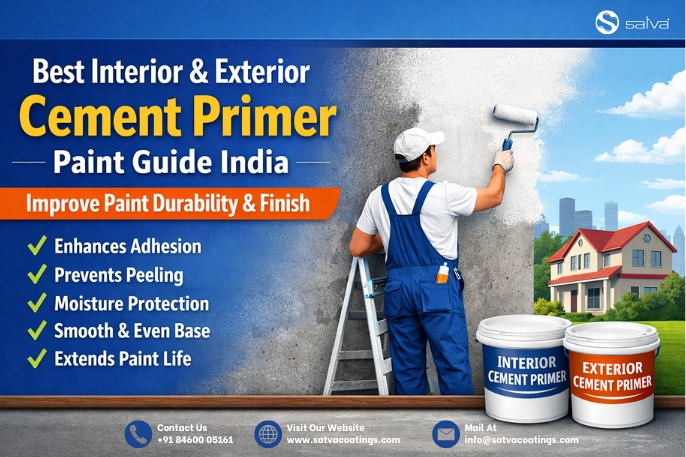
Choosing the right cement primer is one of the smartest decisions you can make before painting any surface. Whether you plan to paint interior walls or exterior facades, a high-quality primer ensures stronger adhesion, smoother finishes, and long-lasting results. Moreover, the right primer protects surfaces from moisture, alkali, and peeling paint. As a result, your final paint coat looks richer and lasts longer.
In India’s varied climate, from humid coastal regions to dry urban environments, a reliable primer plays an essential role. Therefore, homeowners, builders, contractors, and architects all search for the best cement primer paint that offers durability, affordability, and performance.
This comprehensive guide explains everything you need to know—from types and prices to application tips and buying advice—so you can make a confident decision.
What Are Cement Primers?
Cement primers are specially formulated base coats applied to cement, concrete, plaster, and masonry surfaces before painting. They prepare the surface so the final paint adheres better, spreads evenly, and lasts longer. In simple terms, a primer acts as a bonding layer between the wall and the paint.
Fresh cement walls are porous and absorb paint quickly. Because of this, paint may look patchy or peel over time if applied directly. However, when you apply a cement primer first, it seals the pores, strengthens the surface, and creates a smooth base for the topcoat.
Why Cement Primer Matters Before Painting
A well-prepared surface ensures the paint adheres properly. Consequently, the paint looks even and resists peeling. Without primer, paint often absorbs unevenly into cement plaster. As a result, walls may look patchy or dull.
A high-quality primer seals pores and improves adhesion. In addition, it strengthens the bond between paint and surface. Because of this, the paint lasts longer and maintains its finish.
Key Benefits of Using Cement Primer
- Improves paint adhesion
- Reduces paint consumption
- Prevents peeling and flaking
- Enhances paint durability
- Protects from moisture and alkalinity
- Creates a smooth, uniform base
Furthermore, primers help reduce maintenance costs over time. While primer adds a small upfront expense, it prevents costly repainting later.
Where You Should Use Cement Primer
You can use primer on both new and previously painted surfaces. However, the application method may vary. New walls absorb more primer, while older walls require proper cleaning before application.
- Fresh plastered walls
- Concrete surfaces
- Exterior walls
- Interior rooms
Types of Cement Primer Paint in India
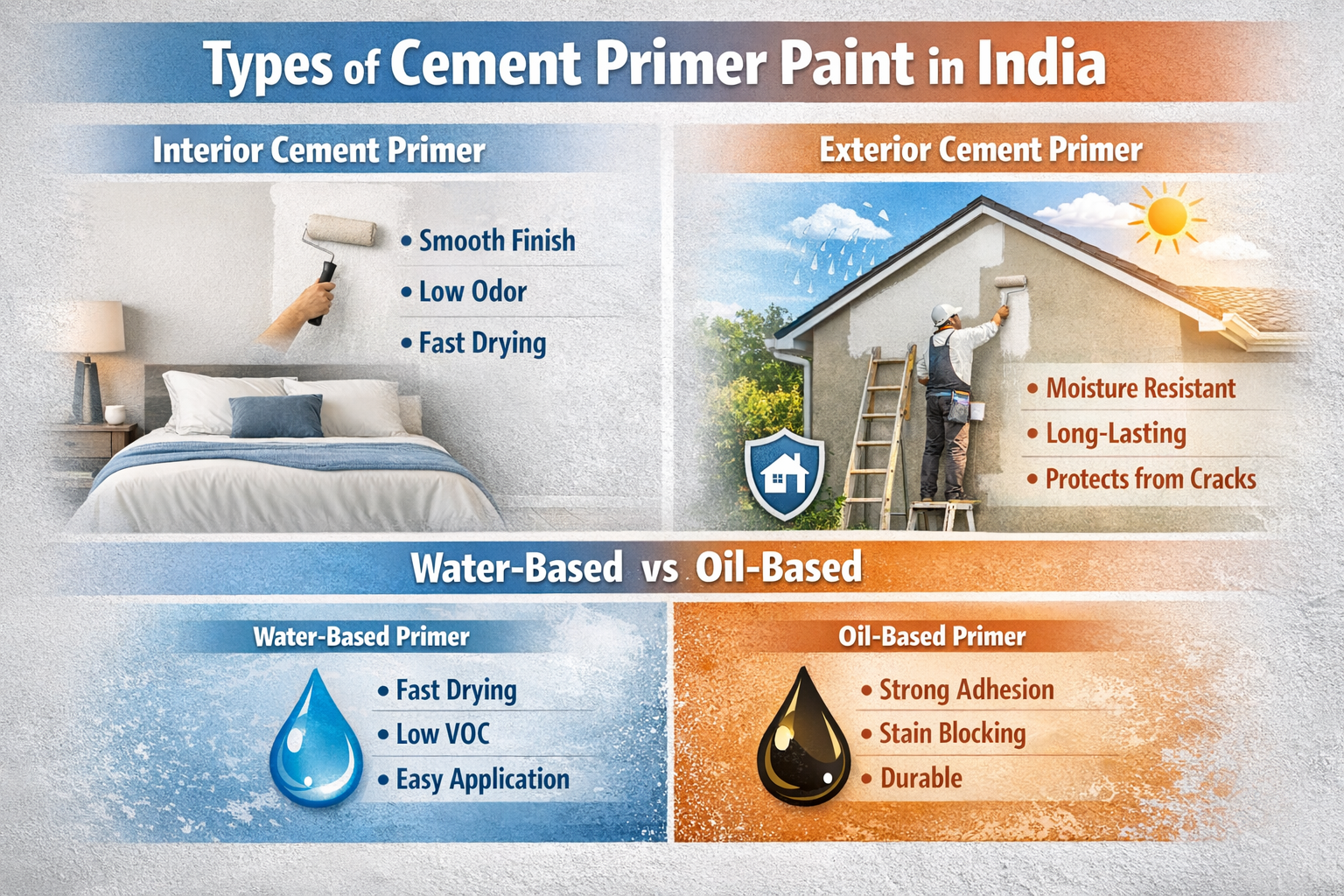
Selecting the correct primer depends on your project requirements. Different primers serve different purposes. Therefore, understanding each type helps you choose wisely.
Interior Cement Primer
Interior primers work best for living rooms, bedrooms, kitchens, and ceilings. They provide smooth finishes and help topcoat paint spread evenly. Additionally, they reduce paint absorption and improve coverage.
Interior primers dry faster and usually have low odor. Because of this, they are ideal for residential spaces. They also help achieve a uniform finish under emulsions or distempers.
Exterior Cement Primer
Exterior surfaces face harsh weather, including rain, sun, and pollution. Therefore, exterior cement primer must resist moisture and alkalinity. It protects paint from cracking and fading.
Exterior primers form a strong protective layer. As a result, they increase paint life and prevent damage caused by environmental exposure.
Water-Based vs. Oil-Based Primer
Both options are available in India. However, water-based primers are more popular because they dry quickly and emit less odor. On the other hand, oil-based primers provide stronger sealing on rough surfaces.
Water-based primer advantages
- Fast drying
- Low VOC
- Easy application
- Cost-effective
Oil-based primer advantages
- Strong adhesion
- Better stain blocking
- Durable
Cement Primer Price Guide in India
Budget plays an important role in choosing the right primer. Prices vary depending on brand, quality, and quantity. However, understanding average costs helps you plan better.
1. Cement Primer 1 Liter Price
A 1-liter primer pack suits small repairs or testing purposes. Typically, the price ranges between ₹120 and ₹250. Premium brands may cost slightly more. However, they often provide better coverage and durability.
2. Cement Primer 10 Liter Price
A 10-liter pack is ideal for medium-sized rooms or small homes. Prices usually range from ₹900 to ₹1,600. Choosing a high-quality primer may reduce paint usage. Consequently, it saves money in the long run.
3. Cement Primer 20 Liter Price
Large construction projects often require 20-liter packs. These packs are more economical per liter. Prices generally range from ₹1,800 to ₹3,000 depending on brand and quality.
How to Choose the Best Cement Primer Paint
Selecting the best primer requires careful consideration. You should evaluate surface condition, environment, and budget. In addition, you should check compatibility with your topcoat paint.
1. Surface Condition Matters
New plaster requires more primer because it absorbs quickly. Old walls must be cleaned and sanded before application. Otherwise, primer may not bond properly.
2. Climate and Location
Exterior walls in humid regions need waterproof and alkali-resistant primers. In contrast, interior walls mainly require a smooth finish and adhesion. Therefore, choose a primer suitable for your environment.
3. Coverage and Durability
Check the coverage mentioned on the product label. A high-coverage primer reduces overall cost. Additionally, durable primers extend paint life and reduce maintenance.
Application Process for Cement Primer
Applying primer correctly ensures the best results. Even the best primer may fail if applied improperly. Therefore, follow a proper step-by-step method.
Surface Preparation
First, clean the surface thoroughly. Remove dust, grease, and loose particles. If the wall has cracks, fill them with putty. Then, allow the surface to dry completely.
Mixing the Primer
Most primers require dilution with water or thinner. Follow manufacturer instructions carefully. Over-dilution may reduce effectiveness. On the other hand, thick primer may spread unevenly.
Application Tools
You can use brushes, rollers, or spray machines. Rollers work best for large surfaces. Brushes help in corners and edges. Spray machines provide fast and uniform coverage.
Drying Time
Allow sufficient drying time between coats. Typically, primers dry within 4–6 hours. However, weather conditions may affect drying time. Therefore, ensure the surface dries fully before painting.
Interior Cement Primer vs. Exterior Cement Primer
Both primers serve different purposes. Therefore, choosing the right type ensures better performance.
Interior Primer Features
- Smooth finish
- Low odor
- Fast drying
- Better paint coverage
Exterior Primer Features
- Weather resistance
- Alkali protection
- Moisture resistance
- Strong adhesion
Using exterior primers indoors may work, but it costs more. However, using interior primer outdoors is not recommended.
Tips to Get the Best Results with Cement Primer
Small details make a big difference in painting projects. Therefore, following expert tips ensures better results.
Always Use Primer on New Walls
Fresh plaster absorbs paint unevenly. Primer seals pores and ensures a uniform finish. As a result, paint looks smoother.
Avoid Over-Dilution
Too much water reduces primer strength. Consequently, adhesion may weaken. Always follow recommended ratios.
Apply Even Coats
Uneven application may cause patchy paint. Therefore, apply thin, even coats. Allow each coat to dry properly.
Check Weather Conditions
Avoid applying primer during rain or extreme humidity. Moisture may affect adhesion and drying time.
Common Mistakes to Avoid
Many people skip primers to save money. However, this often leads to poor paint performance. Additionally, some apply primer on dirty surfaces. As a result, paint may peel later.
Another common mistake involves using the wrong primer type. Interior primer on exterior walls may fail quickly. Therefore, always choose the right product.
Maintenance and Longevity
A good primer extends paint life significantly. However, regular maintenance also helps. Clean walls occasionally and repair cracks early. This prevents moisture damage and keeps walls looking fresh.
Moreover, using high-quality primer reduces repainting frequency. Consequently, it saves both time and money.
Final Thoughts: Choosing the Right Cement Primer Matters
A reliable cement primer forms the foundation of any successful painting project. It improves adhesion, enhances durability, and ensures a smooth finish. Whether you need interior cement primer for home walls or exterior cement primer for building facades, choosing the right product makes a noticeable difference.
Additionally, understanding cement primer price, pack sizes, and application methods helps you plan effectively. Although primer may seem like an extra step, it actually protects your investment. As a result, your paint job looks better and lasts longer.
Therefore, always select a high-quality primer suited to your surface and climate. Prepare the surface properly, apply evenly, and allow adequate drying time. By following these steps, you will achieve professional-level results.
If you want durable, smooth, and long-lasting paint finishes, never skip primer. Instead, choose the best option for your project and enjoy beautiful walls for years to come.